The Pretty Side of Cycling (Story by Tamron)

Hernan Rodriguez uses the Tamron SP 24-70mm f/2.8 Di VC G2 & SP 70-200mm f/2.8 VC G2 lenses to capture the finest sides of a professional female cycling champion, making it more than just about the bike.

Story Contributed by Tamron

 
Here is a brief glimpse into Scotti’s life, which will help set the stage to her personal timeline, shared in these captured images.

Meet Scotti Lechuga: Professional cyclist, wife, mother of two beautiful 6 year old twin boys, fitness coach and coffee addict. She is one of the few mothers in the sport of professional women’s cycling.

Working as a Los Angeles based commercial portrait photographer my work spans from personal commissions to celebrity and editorial assignments. When I was selected to photograph Scotti, it was not merely for my style and artistic vision but also because I shared a deep passion for cycling, stemming from the many years racing in the elite category. “I believe you will understand where I am coming from”, shared Scotti, and that is what essentially sealed the deal. 

Setting the Stage

Since Scotti lives in Arkansas, all the preliminary planning and concepts were discussed over the phone and through emails. Scotti was very direct on some specific shots she wanted to capture from the session. “The rest I leave to your artistic and creative interpretation”, she added. As usual, I created “mood-boards” which displayed the wardrobe, lighting style, studio backgrounds and environmental locations for each shot. This is collaboration between photographer and subject, so I had Scotti email me 15 inspirational pictures she admired. This step also helps ensure the photographer is on the same page as the client. Once Scotti reviewed and approved the boards, we both had a solid idea of what direction we wanted to go with the photo shoot. I also explained to Scotti that these were for reference and inspiration. Many times during a shoot, you might find something that works better, or head in a totally new direction. 

One thing that was certain though, was that we were going to shoot many changes and looks. A classic vintage look, two sophisticated fashion looks, a hybrid shot of cyclist meets fashion, two looks that revealed Scotti’s inner person, and of course, two looks with Scotti and bike. She also arrived with two beautiful carbon fiber bike frames granted by her professional sponsor. This one I thought we would have fun with and make it more of a conceptual shot. She agreed. 

Tamron 24-70
For the most part, I used the Tamron SP 24-70mm VC, for the versatility of its zoom range, which allowed me to cover the various shots we had planned. All except for the tight sophisticated beauty shot, in which I used the Tamron 90mm. I usually will use the Tamron 70-200 for the majority of my fashion work, but since I was shooting full length and ¾ shots combined with a bike and frames, I thought the 24-70 would be a better fit. This lens alone would also cover that 45mm – 50mm range, which is great for full-length fashion and environmental portraits. I also had just received the new lens two days prior, so I was very excited to see the new added features and upgrades. I was shooting many setups with both strobes and continuous lighting, so the lens would have to perform well through the varying f/stops. The fast f/2.8 would also assure the option of creating beautiful creamy backgrounds, and keeping the focus on Scotti. 

One thing I find concerning or rather important when shooting fashion and portraits with continuous lighting, is finding the best camera setting combination allowing me to create clean sharp images. You are bumping up the ISO, dragging the shutter speed to very slow speeds, or opting to use a tripod, which sometimes can disrupt the flow of the photo shoot. This mid-size powerhouse lens performed way beyond my expectations. It allowed me to keep the ISO to a minimum of 100, while relying rather on the Vibration Compensation feature to compensate for the low light. I found myself easily dragging the shutter speed 4 stops, while going hand-held to 1/15th of a second on Scotti’s Vintage setup, which was shot with one “hot-light”. 

Tamron was the first in the market to have a vibration compensation option for a 24-70mm lens, and this “next generation” G2 has just gotten better. With the quick focus, even under low-lighting conditions, I was able to work freely with Scotti, covering a range of poses as we moved and talked throughout her session. This allowed me to capture honest and less contrived expressions. It is a practice I use which can be helpful to both portrait and fashion photographers. 

It Takes A Team

Leading up to the shoot, I usually start by building up my core team, which is integral to the success of the photo shoot. They consist of makeup artist, hairdresser, wardrobe specialist and a personal assistant. This assistant will sometimes work on specific needs I might have and will also delegate certain instructions to the rest of the assistants when they may be needed. Certain tasks might involve shopping, catering, music, grip, and more.

Prepping For The Shoot

Once we agreed on the storyboards, the next step was preparing the stage for the various setups. This is not any different to when I shoot my celebrity portraits. This preparation is extremely important as it helps keep a constant flow throughout the day, and it also leaves less room for error. During this process, I will usually test my equipment along with my lighting gear and make sure everything is working and up to par. As far as lenses go, from my years of experience, I will usually know which lenses I will be using. In this case, since we were shooting in that mid-range focal length, I was very certain the Tamron 24-70 would be all I’d need for the session. I also buy new batteries for all of my triggers, and I pre-cut any Rosco filters for the shots that will be customized for the use of color. I make sure all of my digital media cards are formatted and ready to shoot. If I am shooting tethered, I pretest to make sure all communication channels are working. One last thing I do the day before the shoot is to create a “Call Time” sheet which specifies everyone’s contact information, location of shoot, everyone’s arrival time and lunch break. This can be a time saver and a lifesaver as well. 

Step 1: The first step I take is to breakdown the storyboards into groups that will have the same type of lighting style. Here I can also determine further if it will be grouped with flash or continuous lighting setup. I usually will pre-test the day before and I also will have an accompanying notepad with settings, including ISO, exposure and color filter selection noted along with custom white balance notes. I might also keep a custom white balance CF card for each setup, which allows me to keep consistent color from set to set. 

Step 2: Here I determine the background selections for each setup and the accompanying wardrobe, whether casual or upscale. I usually will use a wide range of solid colored seamless paper from Savage Universal. In my opinion it keeps the focus on the subject and maintains a sense of timelessness. I will also use one setup for a classic portrait appeal, using a custom painted canvas by www.seamless.com. This background will usually be set back far enough from the subject, and shot with a shallow depth of field. I usually will shoot this at f/3.2. I also have a setup for black and white, which will have a higher lighting ratio to create more contrast and pop.

Step 3: In my opinion, this is the most important point to note. Make the client as comfortable as possible. Not only physically comfortable in the studio, but just as important is gaining the trust of your subject. Usually everyone’s a little apprehensive about that initial shot. This was Scotti’s first professional photo shoot, so we dialogued a lot and I made sure she was not feeling rigid throughout her shoot. The dialogue helps the subject get out of their headspace, where they might tend to overthink things. This will translate to very rigid posing. The tendency is for the subject to usually go to the “cliché” hand on the hip pose. I will tend to pose less and let the subject fall into their natural body language expression. I just then slightly refine the pose by repositioning hands and feet, or head tilt. As you will see in the example images of Scotti, her expressions are natural and her poses are fluid.

A Pro On And Off The Bike 

We covered multiple wardrobe changes for Scotti, so I will share some of the standout images of the session, and the specifics of the shot.

Tech Notes: In all of the setups where flash was required, I used a Dynalite Kit, which consisted of 3 power packs. 1 RP1600, 1 MP800, and 1 MP400, in combination with the RoadMax Series Heads and the SR3200 Ring Flash. 2 Portable Baja’s were used on location. 

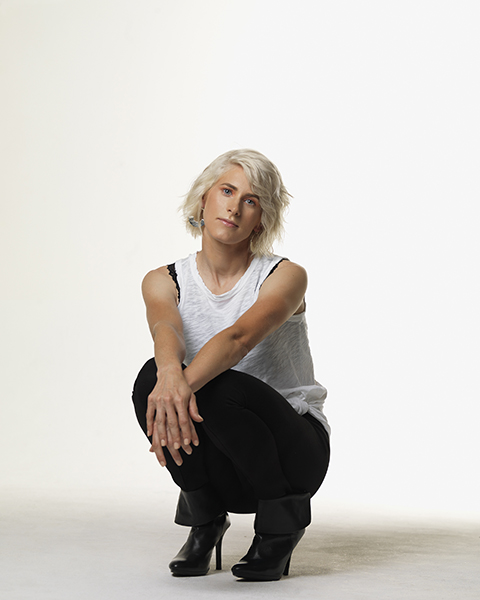
Setup 1. Was our “Ice-breaker” Shot. I wanted to have Scotti be as natural and comfortable as possible. For wardrobe we selected something a bit understated as to let her expressions dominate the portrait. I had Scotti wear a free flowing white tank top and black fitted athletic pants. This allowed her to show some of her fitness as well as her personality. Her low cut boots gave the outfit a fashionable appeal. 
© Hernan Rodriguez
SP 24-70mm, 50mm, f/6.3, 1/125 sec, ISO 125

We began in a white studio cove and lit the background with 4 flash heads. Two bare bulb flash heads were placed one on top of the other and bounced off of a V-Flat on each side, for an even spread of light. All four lights metered f/11 on the background. This was 1 EV above the key light. The key light was a large Westcott Zeppelin Parabolic without diffusion. This light metered f/8. For fill, I used two flash heads placed in a reflective umbrella directly behind me on each side. This was a combined exposure of f/7.1.

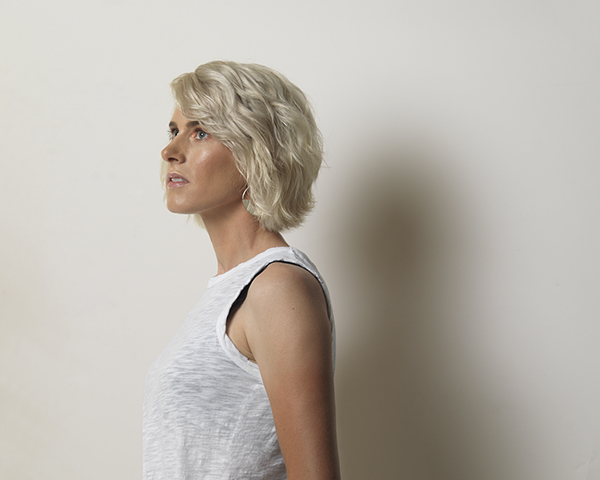
The Tamron 24-70mm allowed me to capture a series of shots that varied in focal length. Most often I use the Tamron SP 70-200mm f2.8, but by using a shorter focal length, I was able to stay closer in proximity to Scotti, which allowed us to interact more intimately. It’s great when you also need to direct the subject through a variety of poses. I was also able to quickly shift between full-length shots, to ¾ horizontals for an asymmetrical look, which gave us the option of using it as a website banner.
© Hernan Rodriguez
SP 70-200mm, 11mm, f/8, 1/125 sec, ISO 125

Setup 2. The second shot was a variation of the first setup. By placing a black V-Flat directly behind Scotti, I was able to quickly switch to a more classic sophisticated look. The lighting setup was kept exactly the same. I had Scotti change into a cobalt blue blouse, which really made her eyes stand out. I wanted this series of images to display her confidence and strength while still showing her femininity. Nothing changed in relation to lighting and exposure. This made for a quick transition with a completely new look for Scotti.
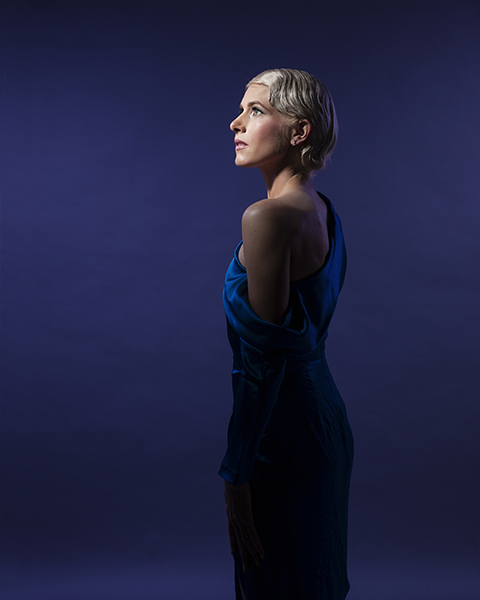
© Hernan Rodriguez
SP 24-70mm, 63mm, f/7.1, 1/125 sec, ISO 125

Setup 3. The next shot was also setup to have an easy transition, with a slight lighting variation and background change. A quick setup of a Savage Gray seamless paper on stands was placed behind Scotti. The key light was kept the same with the Westcott Zeppelin Parabolic. We kept the same distance and power to maintain consistent lighting at f/8. I also wanted to create an overall open fill, so instead of using the two umbrellas for fill, I used a 72”x72” Westcott Scrim Jim in its place. I simply just placed two Dynalite flash heads set far enough behind the scrim, to create my fill using the full size of the scrim. This light quality was smooth, similar as to a large bay window. It also gave me just enough detail and separation from a black bike against a gray background. Since this setup was to be shot full-length with Scotti’s bike, we needed to make sure we had plenty of space around the scene, as to create a clean image that could be used for advertising or editorial purposes. Most photographers make the mistake of viewing the shot through the lens, and crop in too tight. This limits the image from being used for multiple purposes. You also have to make certain the transition of light onto the subject and background are smooth and consistent.
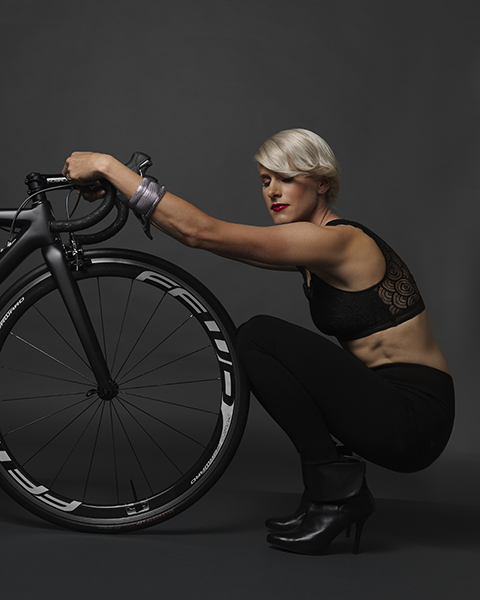
© Hernan Rodriguez
SP 24-70mm, 50mm, f/6.3, 1/125, ISO 125

The Tamron 24-70mm f/2.8 was the best lens option for creating this series of shots. I was able to choose my angle of view, and varied my focal length from 45mm-70mm range for these particular shots. Since the bike was positioned behind Scotti, I also wanted to secure an accurate perspective. I also captured tighter shots by simply walking closer to Scotti, while maintaining my focal length at 70mm. This series of images were some of my favorite shots of Scotti. It presented her as she truly is – A female professional cyclist with a great sense of fashion.

Variation – Since the background and lighting style of this setup covered many looks we had storyboarded, I simply had Scotti jump into two more changes to keep the flow of our day fluid. The wardrobe, posing and expressions are what varied for these shots.

I had Scotti change into a fun expressive outfit to show off some of her funk and “cool” side. Most people might think female cyclists don’t have a life outside of their bikes, or just don’t have a good sense of fashion, but Scotti was the complete opposite. She was fun, possessed a great sense of fashion and was very assertive in her choices. I wanted to show some of that in this next series. I directed Anthony, my makeup artist, to create a bolder look by adding more depth to her eyes, and a bold red lip color. Her hair was also pulled back into a stylish knot. For wardrobe, Scotti changed into jeans with a black sports top, and layered on top was a white mesh athletic jacket that completed the look. I took a series of ten quick shots, which completed this wardrobe change.
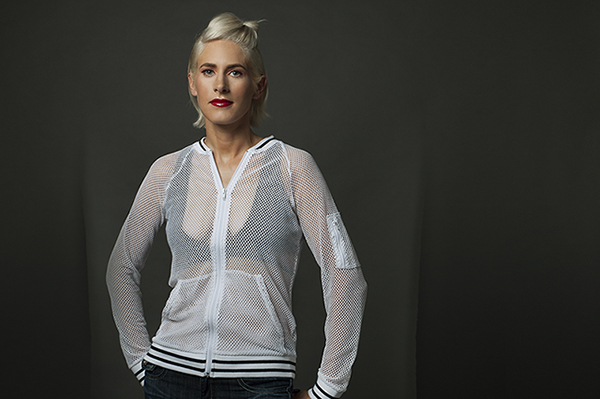
© Hernan Rodriguez
SP 24-70mm, 44mm, f/8, 1/125 sec, ISO 125

The Tamron 24-70 rendered amazing accuracy on the representation of skin tones. To any portrait, beauty and fashion photographer, that is the number one objective. Making sure the color balance is accurate, and the dynamic range in the skin carries enough latitude. I was very impressed. I am sure you can find a lot of literature on these specs for the 24-70, but in my testing, I am sharing this through these portraits. 

Setup 4. The next shot was to capture Scotti the “mother.” Not much change here again. Since this shot was Scotti and her twin boys, all I needed to do was to pull back the large parabolic to allow more spread of light onto three subjects. I also increased the power on my Dynalite pack to compensate for the loss of light. I took a final meter reading to f/11 for light consistency. 
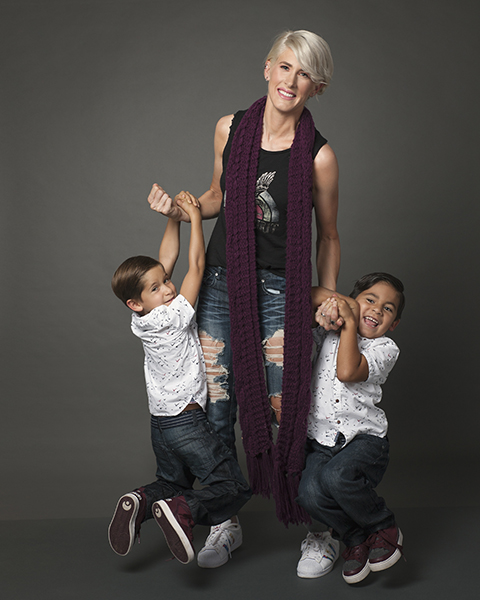
© Hernan Rodriguez
SP 24-70mm, 48mm, f/6.3, 1/125 sec, ISO 125

My Tamron 24-70mm was quick to focus and also gave me the ability to adjust my focal length constantly. I turned off the VC feature for most of my studio shots, since the flash was enough to keep images sharp and my shutter speed also was high enough to keep tack sharp images. 

NOTE: When shooting under mixed lighting conditions, continuous lighting and natural light, I will keep the Vibration Compensation on. Though I will be using flash, I also keep my shutter speed very low to allow ambient exposure. The speeds might vary from 1/15th of a second to 1/60th, depending on the effect and lighting conditions.

I directed Scotti to just have fun with the boys. “Let them hug you, hold onto you, kiss you” I instructed her. I didn’t want anything posed or contrived, so by the constant movement and interaction with her boys, it gave us a great variety of portraits and kept it fluid and organic. By pausing and directing my subjects to pose might have stopped a natural moment from occurring. As a photographer you need to discern when to pose your subjects and when to allow them to just be expressive.

This was really fun for all of us!

Setup 5. Now we step into our fashion segment with Scotti. From our storyboards, we had determined three specific fashion looks. One a vintage change, another a sophisticated look and lastly was a bolder look incorporating color and contrast. 

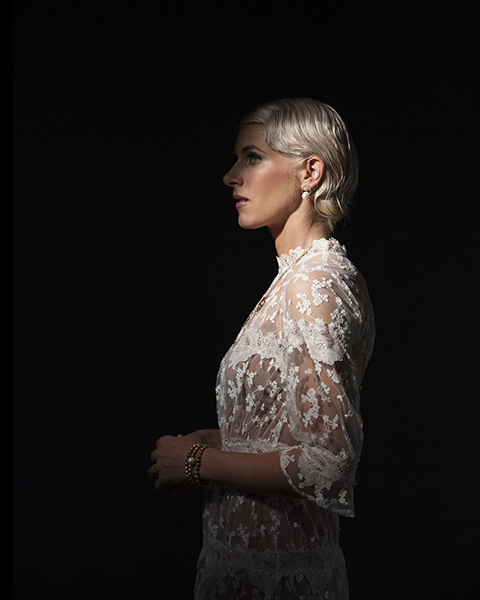
Vintage. Scotti brought a classic off-white vintage dress, which I thought was perfect for creating a 1940’s style portrait. Hard light, deep shadows with high contrast. To replicate this period, we started with another hair and makeup change. The stylist created a period hairstyle with tight waves of hair pinned closely together. This also framed her face nicely. The makeup contoured her cheeks and a deep rose lip color was used instead of red. 
© Hernan Rodriguez
SP 24-70mm, 48mm, f/8, 1/125 sec, ISO 125

With the varying lighting scenarios we had set to shoot, I needed a lens that would help control camera shake, especial when shooting under lower-light conditions. The Tamron 24-70mm Vibration Compensation (VC) technology, which allows photographers to shoot as many as five shutter speeds slower than usual when shooting hand-held, allowed me to confidently capture every shot under constantly changing lighting conditions, even with low ambient and continuous lighting. 

I started with the same Savage gray seamless paper, which kept the focus on Scotti and also worked well for black and white conversions. To create that classic Hollywood style portrait, we decided to use just one “hot-light”, just like they did in the Ol’ Days. I really never use these lights as they tend to get extremely hot and are a bit cumbersome, but there was one sitting around the studio, and I thought I’d give it a shot. Because of the extreme heat, we shot this setup in just five minutes. I clipped on a set of barn doors to direct the light. 

While Scotti was in makeup, I turned on the light, did a quick white balance with a SpyderCHECKR gray card, and uploaded it as a custom white balance. The Kelvin for the light was 3200.

Now this is where the Tamron 24-70mm VC is extremely beneficial. With the newly dedicated MPU (micro-processing unit) solely for Vibration Compensation, you have the flexibility of using much slower shutter speeds with the stabilization performance level of 5 stops. 

Due to the heat emitted from the light and to make our subject confortable, we varied the distance of the light to the subject, which also varied our exposure settings. For minimal noise I kept the ISO set at 100, and relied more on the VC feature to compensate for the slow shutter speed. We shot this series in the 1/15th – 1/50th of a second range at f/3.2. The slow shutter speed also allowed me to create a lot of detail in the fabric shadows by picking up some of the weak ambient light for fill. 

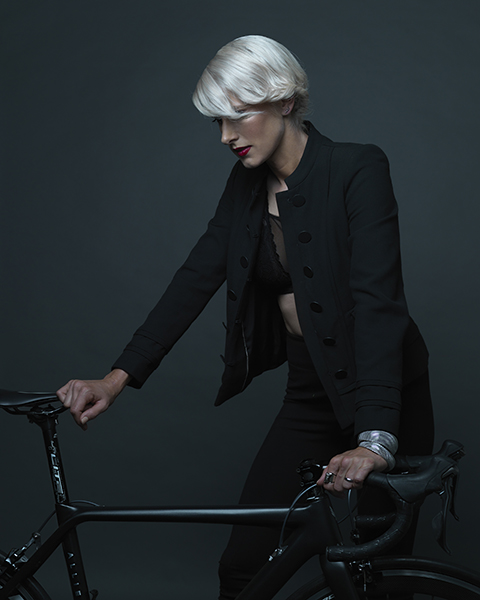
Bold Fashion. In our storyboards, I had diagramed a lighting setup with a very specific look we were hoping to create. When I mention, “hoping”, it’s because we had not tested. Most often with my lighting experience, and my familiarity with my equipment and modifiers, I usually am close to the mark. Sometimes it only takes small adjustments, or maybe it’s a starting point for something even more fantastic. Without my sketchpad though, it is very difficult to just arrive at these types of shots.

The inspiration I took from a 1940’s fashion image, which had a high-contrast lighting style. I decided I would light this with a hard and directional light source. For my key light I used a bare Dynalite flash head with a sheet of Rosco Opal diffusion paper to minimize some of the brightness and hard light edge. After a proper white balance, I also added a Rosco Calcolor 15 Cyan filter to create a cool mood. The light was positioned from the side and relatively high up for a more dramatic effect. For the background, I used two more Dynalite flash heads with 36” black and white umbrellas, bounced onto the same Savage gray seamless paper. To create a more graphic image, we added a Rosco Calcolor 60 blue filter on each light. This along with the bolder makeup added on Scotti created our take of a 1940’s vintage fashion look.
© Hernan Rodriguez
SP 24-70mm, 53mm, f/8, 1/125 sec, ISO 125

Fast and Accurate. Under these low-light studio conditions, the Tamron 24-70mm excelled in capturing focus even after focal length readjustments. This was very apparent in our bold fashion shot, where we were only able to focus with weak modeling light in a dark studio setting. This is in part due to the embedded DSP (digital signal processing) blocks that enable high-speed digital signal processing. We were able to achieve quick responsiveness from the camera’s AF selection point to the lens.

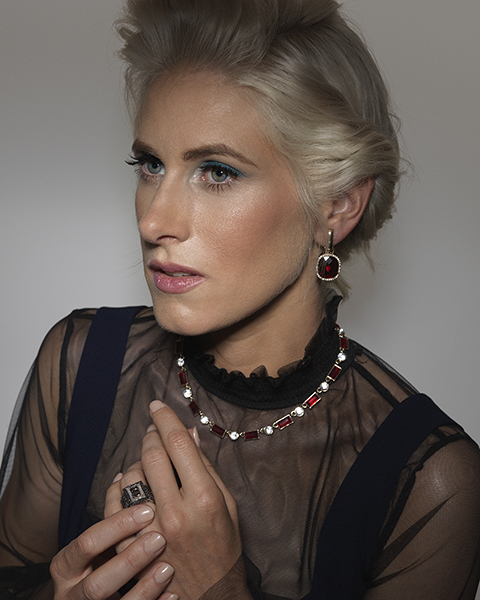
Class and Sophistication. This is how I can describe the last look in this series. Scotti stepped out of wardrobe in a black elegant sheer blouse. Nothing overstated but none-the-less, with a timeless appeal. Her hair was pulled back, which gave notice to the added jewelry Scotti displayed, and a touch of blue eye shadow was added to pronounce her beautiful blue eyes. To add to the timeless appeal, I thought it appropriate to shoot on a white background, and allow the light falloff to add the right amount of depth. I decided to shoot with a Savage Translum white paper roll, which is not 100 percent opaque, but it’s rather more of a velum translucent paper, allowing me to place a flash head behind the paper roll. This created an extra kick of light on the background but not obvious as if I were to use a spotlight directly in front of the background. 
© Hernan Rodriguez
SP 70-200mm, 111mm, f/8, 1/125 sec, ISO 125

The lighting was very tight and precise without much movement allowance for my subject. We spent four hours on setup to construct specific lighting characteristics from this look. I wanted to create a lighting style between a classic portrait and the specular quality you might see in fashion photography. I specifically wanted the light focused on the front plane of her face and graduating darker above her forehead. I also did not want an obvious spotlight effect either. 

One thing I found impressive about the Tamron 24-70mm was the flare and ghosting control it offered. The multiple-layer coating techniques of the lens provided superior anti-reflection performance, especially in backlighting portraits as in this particular portrait. I can also see how this lens would be a perfect fit for any product photographer, as it also captured Scotti’s ruby and diamond accessories with sharpness and clarity. Something most commercial photographers strive to accomplish in their work. This is attributed to the new specialized, high quality glass elements. 

For the main light I used a Dynalite flash head with an18” beauty dish, fitted with a grid and fired it through a Westcott Omega reflector. The shape of the reflector served as a gobo to create the shadow around the face, while keeping the brightness in the center of the face. I also used multiple black boards to control the light falloff and block direct light from striking the lower part of Scotti’s dress. The main light was metered at F/11, four feet from my subject. As a fill light, I used two 36” white and black umbrellas metering F/5 each. I varied the contrast throughout this setup by using either one or two fill lights. The fill was set to the left and right of my subject to create non-directional open fill. 

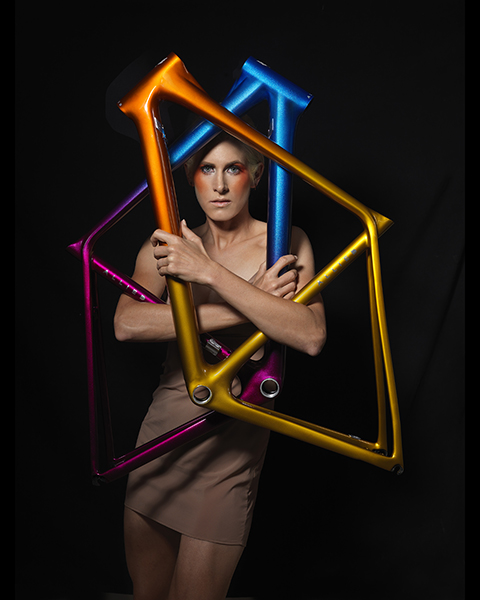
Money Shot. From all of our shot storyboarded, this is the one shot Scottie was counting on as her money shot. She wanted to create an avante-garde fashion shot using her sponsor’s bike frames, which would be able to be used for commercial advertising purposes. The lighting we used was the same, but we added a Dynalite Ring Flash set at a low angle for specular fill. This light was metered 3 stops less than the main light. We also switched our background to black velvet, which really made the frames standout. Scotti also had a makeup change to a bolder and graphic look, adding bright orange eye-shadow and blush to match the bicycle frame. 
© Hernan Rodriguez
SP 24-70mm, 70mm, f/7.1, 1/125 sec, ISO 125

The Tamron 24-70mm is such a sophisticated lens and in a class on its own.
Tips for How to Photograph The Super Moon

Tips for Photographing a Super Moon by David Akoubian.
Story Contributed by Tamron
 
The term “Blue” moon is based on the simple idea that 2 full moons occur in a single calendar month. 2018 has 2 months in which we will have 2 “Blue” moons. The one on January 31, 2018 is also a Super Moon, and the second of the month as well. A Super Moon means the position of the moon is closer to the Earth than normally, so it can appear a slight percentage larger in the frame.
 
I’m an old school guy who falls back on manual settings when it comes to photographing a full moon. I remember my mentor telling me that a full moon is the same as shooting in conditions to the old “Sunny 16” Rule. This means set your camera to manual, select an ISO, I like 200 then a shutter speed and aperture that is a reciprocal value of 1/200th of a second at f16. I prefer 1/800th of a second at f8. This will allow me to capture great detail in the moon and have a fast enough shutter speed to steady movement. I will use a tripod usually, but with a high enough shutter speed and Vibration Compensation, handholding the lens is possible. Depending on where you live, atmospheric conditions may dictate opening up a stop because of haze. If that happens I will either adjust the shutter speed to 1/200th or change the ISO to 400. If you are using either Aperture or Shutter Priority, you will need to adjust your exposure compensation to get detail in the moon usually.
My lens of choice is the Tamron SP 150-600mm Di VC USD G2 lens. I will use either a full frame camera or a cropped sensor camera and crop a little to my personal liking during the processing. I like to find objects to place in the foreground to give it a different look as well. The best day to capture the full moon in the early dusk light is the day before the actual full moon occurs or the day after at sunrise.
 
I encourage you to get out and shoot the moon, have fun, get lots of images, find things to place in the foreground, shoot it high in the sky, but go out and have fun!


 ISO 400, F/11, 1/800 sec, 600mm


 ISO 400, F/8, 1/200th sec, 600mm


 ISO 100, F/8, 1/15 sec 18mm


 ISO 400, F/9, 1/640 sec, 850mm

Wide Angle Wanderings

When Marcie Reif’s daughter was born, she intended to take up photography as a way to document her child’s early years. “I was a teacher and worked with kids all of the time, so taking pictures was a fun diversion,” she says. She figured she could earn extra money on the side taking photos of kids, but as she got better at it, her side venture started growing. A few years in, Marcie finally decided to quit her teaching job and started her business as a family, newborn, and lifestyle photographer based in Atlanta.

On the flip side, Marcie also became involved with Clickin Moms, an organization dedicated to female photographers at every skill level. “Taking pictures of my kids as a hobbyist, especially down by the beach, is what grabbed the attention of that group,” she says. “Every time we went down to the water, I’d rent new lenses or a different camera—always looking for something new to play with.”

Marcie and her family recently took a Disney cruise—right as other families are also starting to plan their winter vacations to warmer climes—and she brought the Tamron SP 15-30mm F/2.8 VC wide-angle lens with her on her trip. “It’s such a versatile lens for a vacation like this, where we’re carousing on the cruise ship and on the beach,” she says. “This lens lets me capture the kids as they’re playing or otherwise entertaining themselves, with a good portion of their environment in the background; after all, you want to remember where you went on vacation! I especially like this lens because it’s not intrusive, meaning my kids are generally more cooperative in terms of letting me take photos.”

The lens is also a stellar performer in a variety of lighting situations, which is crucial when you’re constantly on the go on vacation. “Of course I love shooting at the so-called golden hour, but that’s when you might be having dinner or your kids are tired after a long day in the sun,” Marcie says. “The 15-30 performs well even during midday and nighttime scenes. It’s liberating to not have to wait for a certain time of day to shoot, ensuring you don’t miss a single moment of your trip.”

Marcie also appreciates the lens for the creativity it allows her on the fly. “When you’re on vacation, you obviously want to capture the memories for your photo album, but I also find myself playing as if I were an artist,” she says. “I really like the 15-30 because it lets me experiment with light and colors so effectively.”

A prime example of the 15-30’s performance was a photo of Marcie’s son snorkeling in the clear waters of Castaway Cay, Disney’s privately owned island. “I knew the lens would be able to capture the sky, the water, and all of the colors beautifully,” she says. “It almost looks like it’s not real. I barely had to edit this image afterwards. The only thing I did was add some contrast and a bit to the blacks. I also removed some people from the photo to make it appear like we were there by ourselves.”

© Marcie Reif
15mm, F/2.8, 1/4000th sec., ISO 200
The 15-30 also allows Marcie to hang back when her kids are immersed in play. “It’s not always necessary to capture your subjects’ faces when you’re going for a candid vacation photo,” she explains. “My son was just playing with this shower in this photo. Kids can sometimes get caught up in what they’re doing, and rather than distract them so they’ll look up for your photo, just take the photo. That’s part of being on vacation with kids—you have to capture them when you can. This picture ended up being one of my favorites, with that water falling on his head, and the way the lens was able to capture the movement and light here without being overblown.” 

© Marcie Reif
30mm, F/3.5, 1/800th sec., 200 ISO
The same type of furtive capture happened back on the ship when Marcie spied her daughter looking out over the water. “I asked her to look at me, but she didn’t really want to,” she says. “I loved the way the wind was blowing her hair and the way the light was coming through it, though, so I took advantage of those elements instead. I also appreciate the lines and curves of the ship’s form. Whenever I could, I’d try to bring my kids up to that bar and shoot at different angles just for that reason.”

© Marcie Reif
15mm, F/3.2, 1/1600th sec., ISO 200
To show how the 15-30 can be wielded for portrait photos, Marcie asked her friend’s daughter for a picture as she showed off her red heart sunglasses. “I was close enough that I could have reached out and touched her—you can actually see my reflection in her sunglasses,” Marcie says. “I’m still able to get an attractive close-up, with my subject super-sharp and the background blurred out nicely, which prevents it from distracting from my smiley subject. You can still tell exactly where we are, though.”

© Marcie Reif
30mm, F/2.8, 1/2500th sec., ISO 250
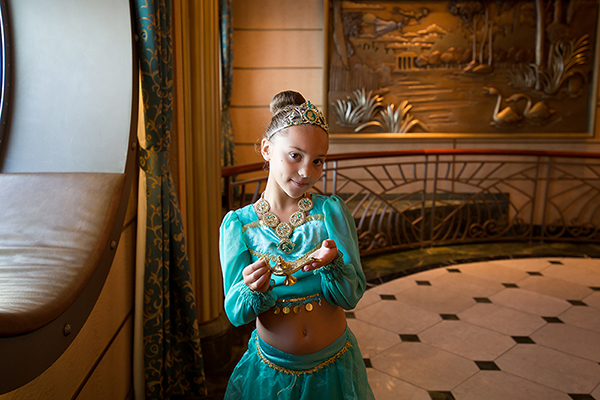
A photo of Marcie’s daughter decked out in her Princess Jasmine outfit made for a similarly sweet shot. “I placed her in front of the ship’s porthole because I liked how the light was streaming in through it,” she explains. “I knew the clarity would be good, and she was just happy she got to pose holding her genie lamp, which is why she has such a natural smile. It was a win-win for both of us.”

<center<© Marcie Reif
30mm, F/2.8, 1/100th sec., ISO 1600

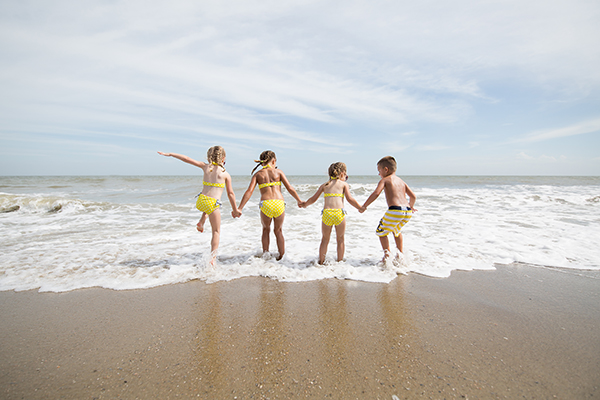
Marcie says the 15-30 is tailor-made for photos like the one she took of her kids and her friend’s two girls hanging out in the surf. “The very slight distortion on the wave that I get shooting at the widest end of the lens is what I’m drawn to,” she says. “It serves as a leading line of sorts. I also love the way the lens preserves the sky and how you see all of the color in the image from their bathing suits centered right in the middle. The only thing I would’ve changed about this image, if I’d had the time, is to keep the horizon from going through their heads. I usually try to keep an eye on that, by either crouching down or getting up higher, but I had to break that rule to quickly capture this moment.”

© Marcie Reif
15mm, F/2.8, 1/6400th sec., ISO 250 
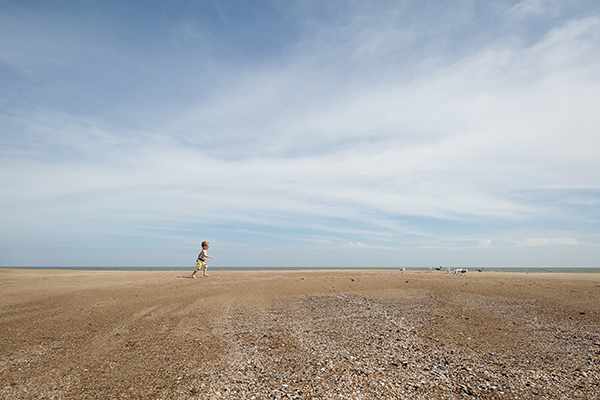
The lens also allows Marcie to indulge that artistic side she loves. “I visualized the scene of my son dashing across the beach before he even did it,” she says. “He was running around, so I simply jumped in front of him and waited for him to run through my frame. I was drawn to the sand, the sky, the colors, the yellow in his bathing suit. Once again, the lens is perfect for this—the wide angle at the 15mm end distorts the image ever so slightly, just enough to take a photo that might seem kind of ordinary and make it look more creative.”

© Marcie Reif
15mm, F/4, 1/4000th sec., ISO 250
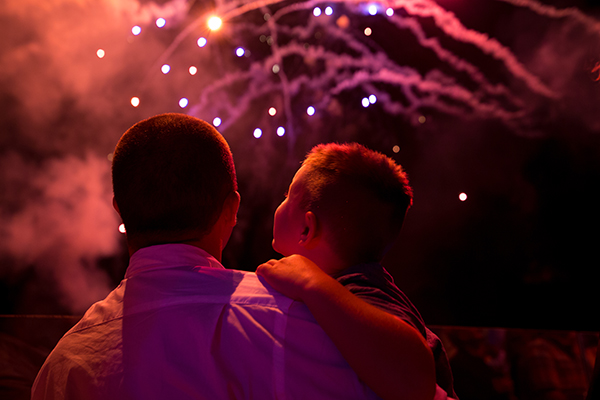
The 15-30 handled superbly when it came time for Marcie to document a Disney day’s-end favorite: nighttime fireworks. “Fireworks can be pretty hard to shoot, especially because they happen so quickly,” she says. “I always think of them as a big challenge. I really loved how this particular image came out, however, because you can see my son and tell he’s in awe of the show, even though (once again) you can’t see his full face. The light on their faces is a reflection of what they’re staring at in the sky. It was the perfect end to a great day.”

© Marcie Reif
30mm, F/2.8, 1/60th sec., ISO 2000 
To see more of Marcie Reif’s work, go to http://marciereif.com

Charley Voorhis photographs Washington state’s most scenic byway with his Tamron powerful lens lineup

If you’re looking for the “ultimate road trip,” head to the Pacific Northwest. That’s where the Cascade Loop Scenic Byway is located: a 440-mile route that starts just south of Seattle in a little town called Mukilteo, heading east along Highway 2 through the southern Cascade Mountains. “It’s an all-encompassing representation of Washington and what the state is known for,” says Charley Voorhis, a local photographer commissioned to help loop organizers document and promote the route. “It takes you through all kinds of landscapes and sceneries. It’s definitely doable in one epic day if you really pushed it, but it’s best traveled over four days and three nights to really experience each region.”

To capture the Cascade Loop for his client, Charley focuses on three main aspects: lodging, adventure, and sightseeing. “That’s the client’s agenda as to what they’d like to show, so that’s usually what I concentrate on photographically when I travel the loop,” he says. “But personally, I’m most attracted to the adventure and landscape side of things. There’s majestic beauty all along the route, and I make sure I’m up at 4 a.m. and shooting all the way through to sunset to capture all of it.”

For two recent trips along the loop, Charley tapped into his full Tamron lens arsenal, including the SP 15-30mm F/2.8 VC Wide-Angle, the SP 24-70mm F/2.8 VC G2, and the SP 150-600mm VC. “They’re all so sharp and versatile,” he says. “Being out in nature with these landscapes sprawled out in front of me, I usually always have the 150-600 readily available, because gorgeous things can happen in front of the camera; I need the reach so I can immediately zoom in on them. And the 15-30 has revolutionized my ability to think wide, because I can use it on a full-frame camera (my previous wide-angle lens was an APS-C lens). The 24-70, though, is the lens that lives on my camera as my go-to. All three lenses allow me to work a lot quicker, which is important when you’re working with light that’s changing quickly.”

Charley and his team have also put together a video for the Cascade Loop Scenic Byway called “Found,” using a combination of all of his Tamron lenses. “The idea arose that we should brand the content we do as ‘found on the Cascade Loop,'” he explains. “It’s a play on words, because ultimately you ‘find’ yourself when you head out on an epic road trip like this. That’s the tone I wanted to capture in this video—that we’re all soul-searching at any given time, and things happen in our lives that shape our feelings and our life trajectory. Shooting handheld video with these three lenses is terrific, because they’ve got the Vibration Compensation (VC) feature I never had previously. It allows me to take advantage of shooting in so many more situations now.”

Here, Charley talks about some of the images he captured on his trips around the loop.

© Charley Voorhis
15-30mm (15mm), F/5.6, 1/500th sec., ISO 100

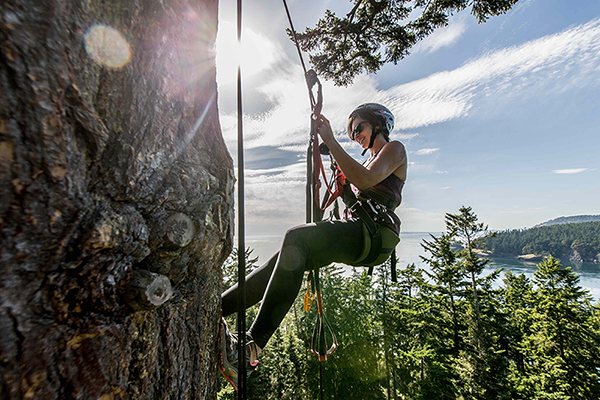
One of the things you can do along the Cascade Loop is what’s called a canopy tour. You pay a company to harness you up, and the staff will guide you up an old-growth Douglas fir—it’s like 300 or 400 years old. 

I climbed alongside this character here, with my 15-30 snapped onto my camera, which was attached to my belt with a carabiner. Once I was up there, I was only a few feet from her, but I was still able to get a shot that wasn’t too close or intrusive. The Vibration Compensation (VC) really helped out in this case, because I was swinging around a bit while I was dangling up there. The stabilization helped me get a shot that was usable. 

© Charley Voorhis
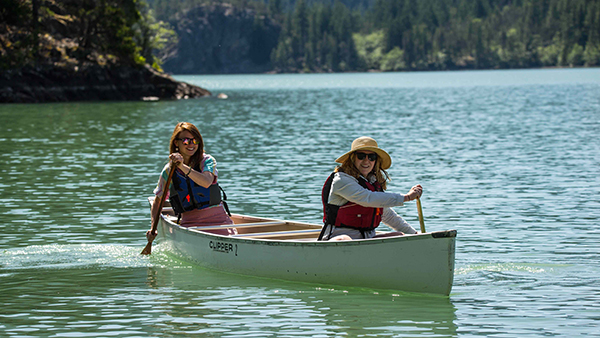
150-600mm (150mm), F/6.3, 1/500th sec., ISO 100

The idea here was to capture people on the lake canoeing and having a good time. Luckily, these were characters of ours, so we weren’t voyeuristically photographing random people. I was able to shout out across the water and tell them what direction I wanted them to go in and come up with different compositions along the way. I was about 50 yards away from them (about half the length of a football field). The hardest part was getting them to smile. I had to keep yelling, “You’re having fun!”

One of the cool things about this lake is it has glacial sediment along the bottom. When everything is just right, the lake turns this milky green color. To help bring out that milkiness, I positioned myself so the sun was more behind them and up to the left. If it had been directly in front of them, the glare may have become an issue.

© Charley Voorhis
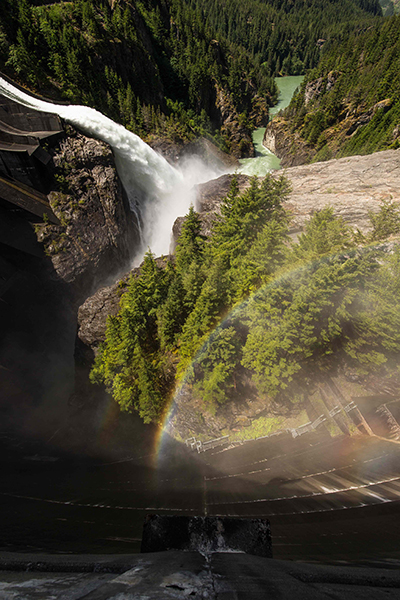
15-30mm (15mm), F/6.3, 1/400th sec., ISO 100

Along the upper Skagit River lies Diablo Dam, which powers much of Seattle. It’s built along the granite walls of Diablo Canyon. The builders wanted to build a spectacle for the locals to visit that would connect them to the outdoors, so they tried to preserve as much of the natural landscape in the dam as possible. Instead of just creating a huge concrete monstrosity, they made it look more like a nature-esque waterfall. It gives it this otherworldly look, especially when you can stand right up on top of it and peer over the side. 

Capturing this rainbow was simply good luck. What I teach my students is to have a reliable camera and lens and always be ready and opportunistic about things that present themselves. You can’t always plan on a particular element or guarantee a sunrise or sunset is going to be beautiful. But when something is beautiful, you want to be sure you’re ready for it. 

© Charley Voorhis
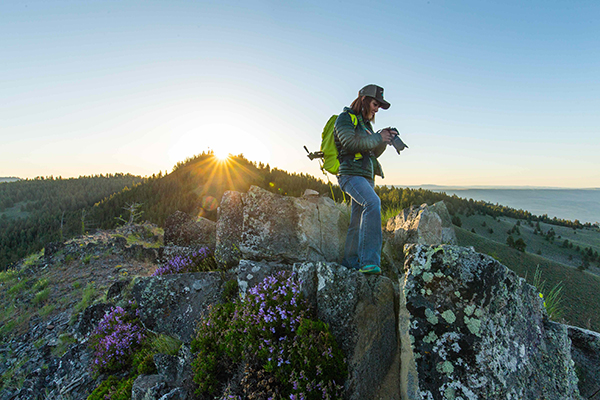
15-30mm (15mm), F/10, 1/100th sec., ISO 100

The woman in this photo is Annette Pitts, the executive director of the Cascade Loop. Her job is to live on the loop, basically. She travels around it four or five times a month, connecting with all of the members of the loop along the way. The idea was that we’d take some pictures of her shooting, since she’s learning more about photography right now. We wanted an in-the-field portrait of her; this is a photo she now uses on brochures and other forms of marketing collateral, since photography is a big draw for people to travel the Cascade Loop. 

We went out right before sunrise and hiked to the top of that mountain. Then, as the sun was coming up, I strategically positioned myself in that spot so the sun would be on the other side of the frame from her right as it was cresting. By closing down my f-stop somewhat, I was also able to capture it as a sunburst. I did have to shift side-to-side 5 or 6 feet to make sure the sun was positioned right where it is, for a sense of symmetry and balance. As you start shooting more, you start paying attention to how elements like that line up—and you remember that you have the power to physically move to achieve the photo you want. People forget that sometimes and keep their feet frozen in place. 

© Charley Voorhis
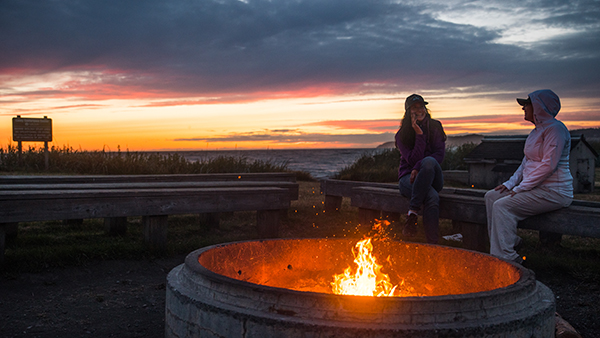
24-70mm (32mm), F/2.8, 1/320th sec., ISO 400

My hope for this photo was to show an ending of sorts for our Cascade Loop story—that even after the day is done, there’s still much fun and joy to be had. It was the perfect time for my subjects to unwind and enjoy a gorgeous sunset over the ocean.

It took a lot of effort to preserve the sky in the background and have the bright fire in the foreground, all with my subjects still illuminated. My strategy was to expose for the sky and then extrapolate from there. Realize in a case like this that on your LCD screen, the foreground is always going to look a bit darker than what you’d like it to. You can always bring up the shadows a little and reveal more of that information later in post-processing. 

© Charley Voorhis 
15-30mm (17mm), F/2.8, 20 sec., ISO 2500

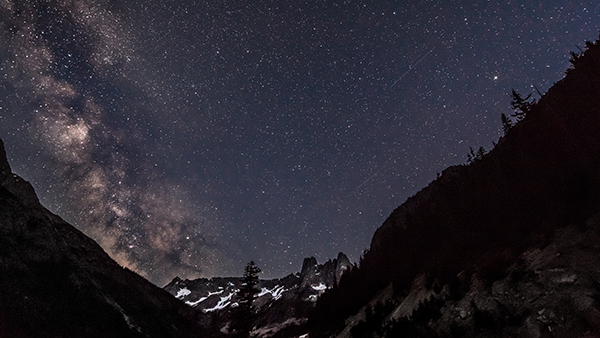
At one point along the North Cascades Highway, you’ll catch a glimpse of one of the most iconic rock formations in the area: the Liberty Bell. It’s a popular climbing spot when the weather is agreeable, but for photographers, it makes for a stunning subject all year round. It was going to be a little out of our way to photograph it, since we’d have to go in the middle of the night, but the workshop students I had on this trip excitedly volunteered to go on this impromptu shoot. 

The night was crystal clear—perfect to teach them night techniques. None of the people on this particular tour had ever photographed stars before, so it was really an eye-opening experience for all of them. We set the composition up for the students from the side of the road, with the hope they’d be able to capture the Milky Way and witness how the camera can see a whole dimension of light you can’t see with the naked eye. We had them all use tripods, then I went around to make sure everyone knew how to turn on their timers (not everyone had a remote shutter). This way, the picture would be taken 2 seconds after they pressed the button. I explained that otherwise, even touching the camera for just that brief moment would cause camera shake and motion blur in their shots.

They all were stoked when they saw the results of what their cameras were able to do. Basically everyone who was there got at least one successful photo. There was one lady who approached me at breakfast the next morning and said, “That’s been on my bucket list forever; I can’t believe I actually got to go do that.” It’s really cool to be able to share that with newer photographers.

© Charley Voorhis
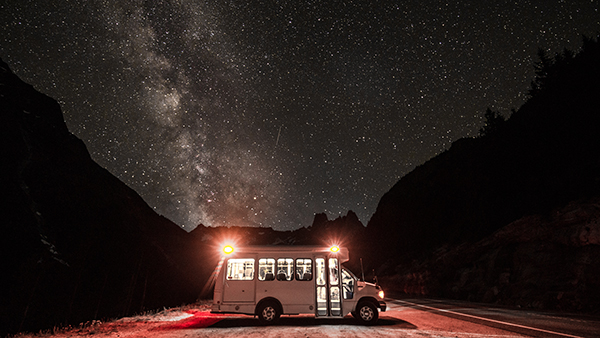
15-30mm (15mm), F/2.8, 20 sec., ISO 2500

This was the last shot of the night. We fired up the bus, everyone got out, and then we just photographed the bus, empty, under all of the stars. My idea was we could use that photo to promote more of our night workshops, letting people know that we have this bus we can load up, drive to an amazing place, and take these types of star shots. 

I’m not sure exactly what kind of bulbs are in the bus, but for whatever reason, the lights just went to that reddish-hot pink color in the photo. It was a happy accident, because the naked eye certainly didn’t see it that way. The naked eye couldn’t even see the mountains or sky behind the bus, because the lights overwhelmed our vision in the middle of the darkness like that. It’s a bit of an experimental shot, but I think it really works.

To see more of Charley Voorhis’ work, go to www.voortexproductions.com

Tamron Announces New VIP Club

Tamron USA Announces the Launch in 2018 of New VIP Club

 For Owners of Multiple Registered Tamron Lenses


December 26, 2017, Commack, New York-Tamron USA announced the development of a new VIP Club for registered owners of multiple Tamron lenses. To be launched in 2018, the VIP Club will include select users who have registered their Tamron lenses through the company’s online warranty registration system since May 2011 through January 15, 2018 (certain exclusions apply, see website for rules and details). There are three VIP Club levels: Silver for those having registered four purchased lenses; Gold for those having registered five purchased lenses; and Platinum for those having registered six or more purchased lenses. Club membership will be evaluated each year to include new members who qualify and to increase the level of existing members if applicable. The VIP Club will be in effect February 15, 2018 and 2018 members will be notified by email. Complete rules and details of the program are available at www.tamron-usa.com/vipclub.
 
2018 Silver Level Benefits (Four Registered Lenses)
Tamron owners who have purchased and registered four lenses during the time-frame of May 2011 and January 15, 2018 are eligible for these 2018 membership perks: Welcome gift; $50 bonus rebate each year of Silver status towards any Tamron lens; 50% off one Tamron event ticket each year of Silver status; 10% discount on non-warranty repairs; invitation to participate in the Tamron VIP Member contest; and three issues of the new Tamron magazine mailed to the member’s home.
 
2018 Gold Level Benefits (Five Registered Lenses)
Tamron owners who have purchased and registered five lenses during the time-frame are eligible for these 2018 membership perks: Welcome gift; T-shirt; $75 bonus rebate each year of Gold status towards any Tamron lens; 50% off two Tamron event tickets each year of Gold status; free pass to one event per year of Gold status; 15% discount on non-warranty repairs; invitation to participate in Tamron’s VIP Member contest; and three issues of the new Tamron magazine mailed to the member’s home.
 
2018 Platinum Level Benefits (Six or More Registered Lenses)
Tamron owners who have purchased and registered six or more lenses during the time-frame are eligible for these 2018 membership perks: Welcome gift; T-shirt; Tamron apparel; $100 bonus rebate each year of Platinum status towards any Tamron lens; 50% off three Tamron event tickets each year of Platinum status; two free passes to any Tamron event per year if available (excludes Summit); 20% discount on non-warranty repairs; lifetime limited warranty on any new Tamron lens purchased and registered within two years of Club induction at Platinum level; free shipping on any lens sent in for repair; exclusive Tamron Photo Tips Hotline; free 2-week lens loaners, if available; invitation to a 4-day workshop (The Workshop Summit, details below) if qualified; invitation to participate in the Tamron VIP Member contest; invitation for chance to be profiled on the Tamron website; and three issues of the new Tamron magazine mailed to the member’s home.
 
The Workshop Summit
Members of the Tamron VIP Club Platinum level whose latest lens purchase and lens registration was within the past two years as of January 15, 2018, will be invited to a 4-day/3-night Workshop Summit scheduled for Fall 2018. The Workshop Summit is limited to 25 participants, first-come/first-serve. Invitations will be sent to qualifying Platinum Level members in Spring 2018 by priority mail. The Workshop Summit includes three nights hotel, meals, transportation to/from hotel/airport in destination city, workshop transportation, workshop and loaner lenses. Airfare, home airport transportation, and other incidentals are not included. The Workshop Summit will be offered each year, and Platinum level members may participate in one Workshop Summit during the life of the program.
 
Tamron VIP Program Rules and Details
Complete rules and details are at www.tamron-usa.com/vipclub.

Shooting Wildlife and Wilderness in World-Class National Parks

At least twice a year, Cecil Holmes says farewell to home base in Huntsville, Alabama, and heads out to Grand Teton National Park in Wyoming. While he’s there, he also makes the four-hour drive to Yellowstone National Park, where he complements the wildlife and landscapes he photographed in the Tetons with the geysers and geothermal pools (and yes, more wildlife) found in Yellowstone. 

While photographers can find different attractions to document in the parks depending on the season, Cecil enjoys the late spring for his national park adventures. “These images were all taken in June, when there’s still snow on the mountains, the temperature is warming up a bit, and the crowds haven’t built up yet,” he explains. “Plus, as the snow melts and it starts getting warmer, the wildflowers come out in full force.”

This time around, Cecil packed his Tamron SP 24-70mm F/2.8 VC G2 and SP 150-600mm VC G2 lenses to ensure he could capture every photographic opportunity the parks threw his way. “In the Tetons, the 24-70 is the perfect landscape lens,” he says. “And the 150-600 is indispensable as a compact wildlife lens. I’ve got everything I need to document the entire trip with just these two tools.”

Here, Cecil walks us through seven images he took on his latest trip, as well as how he used the lenses to capture them.

© Cecil Holmes

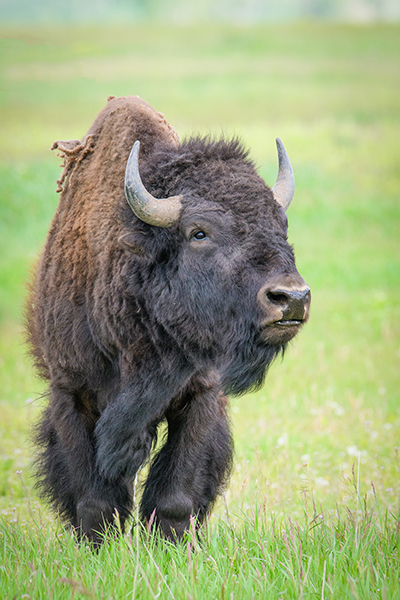
150-600 at 500mm, F/8, 1/500th sec., ISO 1400
Park regulations in Yellowstone mandate that visitors stay at least 25 yards away from most of the wildlife (it’s four times that for bears and wolves). But what’s fantastic about the 150-600 lens is that when you’re photographing an animal the size of an SUV, you don’t need to get terribly close to get a full-frame image of it.

In this case, we happened to see a group of bison on the side of the road and jumped out. I had my camera on auto ISO (and I usually shoot everything in Aperture Priority), so I set the aperture for F/8. The camera selects the shutter speed based on the auto ISO, so I set the auto ISO to a maximum range and then indicated to the camera I wanted a minimum shutter speed of 1/500th sec. It adjusted the ISO based on the light from that point. That’s really the best way if you’re doing a “run and gun” approach as you’re cruising along, because if you have too slow a shutter speed and the bison moves, it will ruin the shot with motion blur. 

© Cecil Holmes

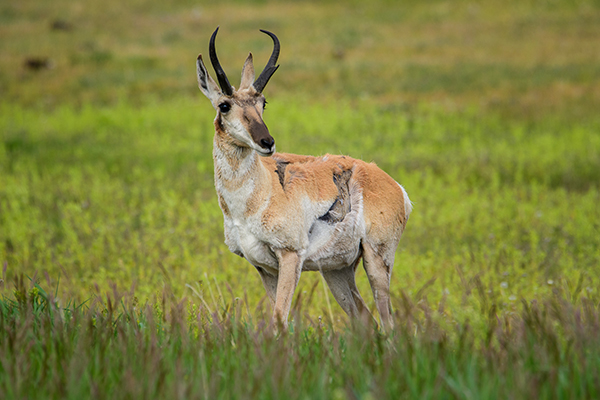
150-600mm at 550mm, F/8, 1/500th sec., ISO 500
In the late spring, the pronghorn, or American antelope, starts to shed its winter coat. That’s another reason I love taking pictures in the Tetons at this time of year, because you can track down a lot of these creatures hanging out with that ragged coat look. Some of them may have already shed most of their coats; others still have their coats hanging off the side of them. It makes for awesome images either way.

I tried to place some of the grass and reeds in front of the pronghorn in the frame as an appealing visual element. When people think of wildlife photography, they often think strictly of the animal in front of the camera. But for a more compelling photo, it’s important to incorporate as much of the animal’s environment as possible. I was able to blur out the foreground a bit, as well as the background, which gives the photo a bit of three-dimensionality and makes my subject pop.

© Cecil Holmes

150-600mm at 600mm, F/8, 1/250th sec., ISO 800
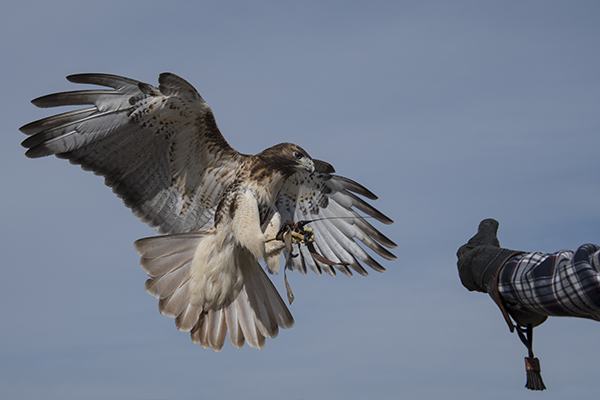
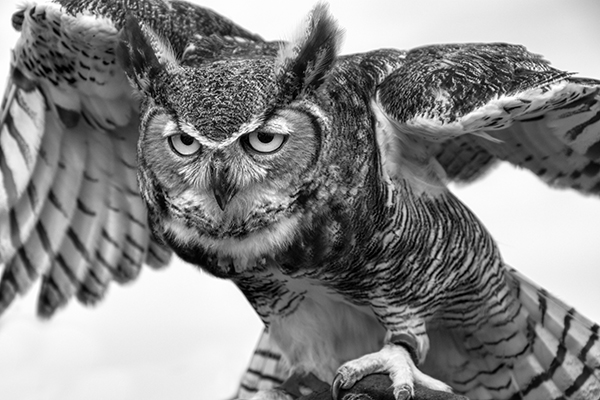
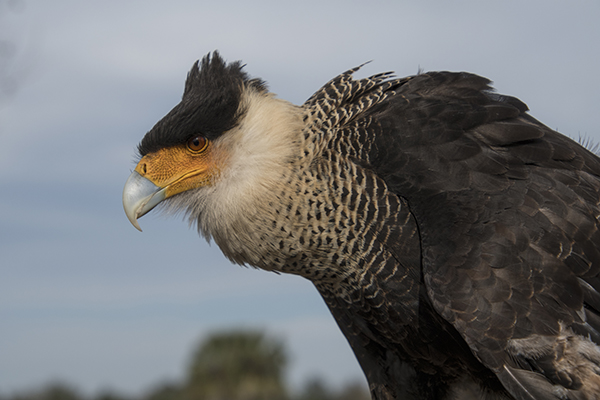
At the Teton Raptor Center near Jackson Hole, Wyoming, birds are brought in to be rehabilitated. People call from all over Wyoming, Idaho, and Montana to report injured birds, and the goal of the center is to eventually release them back into the wild, if they get better. 

We attended a birds of prey show here, and it was a controlled environment where we could get fairly close to the raptors. They bring each bird out every two or three shows so it doesn’t get too stressed. I’d never been to a show like this, so I brought along my 150-600. I decided to put it to best use by stepping back a bit and capturing some tight headshots. 

This photo was of a bald eagle named River, in what one could call its teenage years, before it had lost its brown feathers and morphed into the white eagle we’re used to seeing. It had just dipped into a bathing pool and was trying to dry off, which is why its feathers look so ruffled. The crisp sharpness of the 150-600 allowed me to capture every detail in every feather, and I blurred out the background to get that eye-catching color contrast of brown and green.

© Cecil Holmes

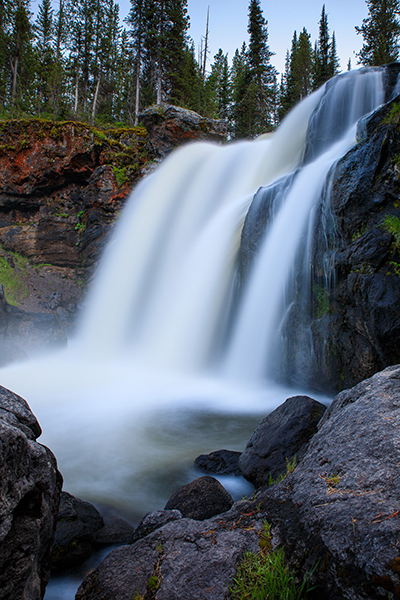
24-70mm at 24mm, F/8, 25 sec., ISO 100
This photo of Moose Falls along Crawfish Creek wasn’t a planned shot at all. We were just driving down the road right before sunset when I saw the sign for it; we didn’t have a lot of time to capture the remaining light. I said, “OK, if we get out of the car and hear water, we’ll grab our gear and run down; if we can’t hear the water, that means it’s too far and we won’t make it.” We got out and heard the water, and it turned out the falls were only about a tenth of a mile from where we parked. It was flowing really nicely, as the park had had a huge amount of snowfall this winter—meaning lots of corresponding snow melt creating lots of full rivers and streams. 

Typically when you’re shooting waterfalls, light is your enemy—you don’t want very much of it, because you want a longer shutter speed to get that smooth, creamy effect in the water. The light was really starting to fade at this point, so I used a 25-second exposure at F/8. If I’m photographing a waterfall in the daytime, I’ll shoot at F/16 to get a lower shutter speed, but in this case I didn’t need that low shutter speed— I needed to get my aperture open enough to get a shutter speed that wasn’t going to be minutes long. The 24-70 really came through for me in this low-light situation.

© Cecil Holmes

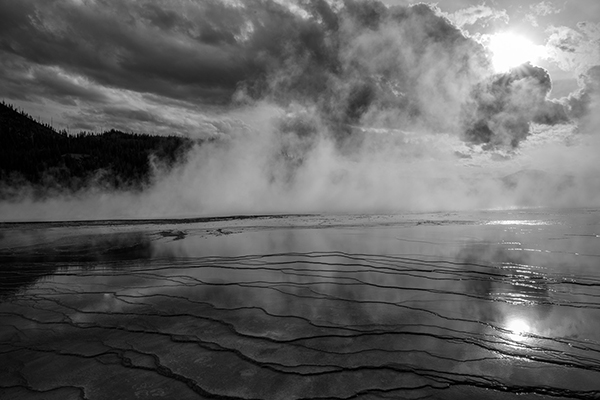
24-70mm at 24mm, F/16, 1/80th sec., ISO 100
The Grand Prismatic hot spring is one of the most photographed geothermal attractions in Yellowstone. Many photos of it that you see from above are taken from either a helicopter or plane, or by people who hike the trail that overlooks it. But when you’re right down there with it, it’s challenging to shoot—it’s not nearly as impressive as when you’re seeing it from up high. Plus, if you’re photographing it on a nonwindy day, the steam emanating from it will just rise and hang in the air. You want a little wind to blow the steam around a bit.

Luckily, I had just enough breeze so that the steam was moving. I was standing right on the boardwalk next to it, and I got down and put my camera as low and close to the pool as I could get it without actually touching anything—you don’t want to scald your equipment! I was trying to capture a sunstar (you can see the sun poking out from behind the cloud in the upper right), but I wasn’t able to get it. Because of that, and because the light wasn’t great, I decided to see what would happen if I turned it into a black-and-white photo. That changed everything. It created a mood I wasn’t seeing in color, and it brought out the textures, patterns, and contrasts of the pool and surrounding area.

© Cecil Holmes

24-70mm at 24mm, F/8, 1/200th sec., ISO 100
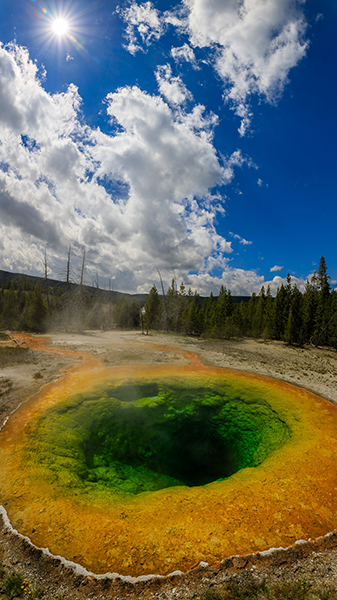
The Morning Glory hot spring is one of my favorite pools to visit in Yellowstone. It’s not very big, maybe about 20 feet wide, and the boardwalk there puts you right along the edge of it. I took about three or four shots at 24mm vertically and then created a panoramic composite. I was finally able to capture that elusive sunstar, and the clouds in that vibrant blue sky added to the overall effect as well.

It’s essential to use a polarizer for an image like this. If you don’t, you’re going to get reflections off the water and won’t be able to see all of those colors and details beneath the surface.

© Cecil Holmes

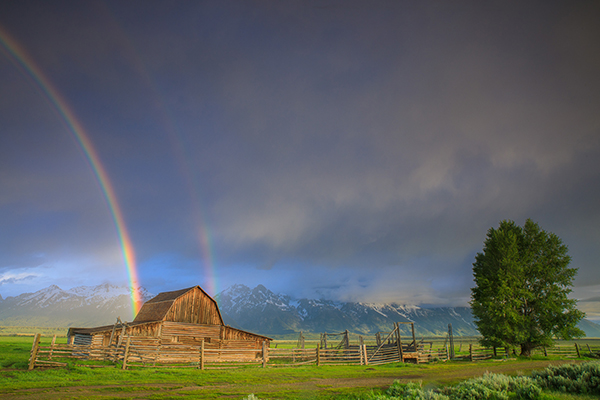
24-70mm at 24mm, F/16, 0.3 sec., ISO 100
While the shot of the Morning Glory Pool was my favorite photo from Yellowstone, this photo of the John Moulton Homestead was my favorite from the Grand Tetons. The morning I took this photo was horrible. It was raining when I woke up, but I figured I was already awake, so I went out anyway to see if I could get anything. I thought maybe, at the very least, I’d get some lightning shots over the mountains.

Right at sunrise, sunlight started to peek out and hit the barn. And then, for about three minutes, this amazing double rainbow appeared that stretched from the John Moulton Homestead to the T.A. Moulton Barn about a quarter-mile down Mormon Row. After that, the sun disappeared and it was gloomy for the rest of the day. Only about 10 photographers were out that morning to witness it, as opposed to the 30 or 40 who might usually be out and about. For someone like me who doesn’t live in the area, this was a once-in-a-lifetime deal. 

To see more of Cecil Holmes’ work, go to www.cecilsphotos.com

Oren Helbok at Pennsylvania’s Strasburg Rail Road with the Tamron SP 15-30mm F/2.8

Oren Helbok has been fascinated with trains since he was a kid growing up in the Bronx, when he’d head down to the local tracks with his dad, a skilled amateur photographer, and have picnic suppers. “My first photo was of a steam train, taken when I was 6 years old,” he says. “I was completely swept away by the engines.” 

Today, Oren’s fascination continues, and he now regularly heads out between 60 to 70 days a year to photograph the steam trains near his home in Bloomsburg, Pennsylvania. “The Strasburg Rail Road, which is the oldest continuously running short-line railroad in the country, is only about two hours south of me, and there are a number of other railroads that also operate steam,” he says. 

When he was a boy, the trains were all about the hardware. “Now that I’m older, I’ve realized the thing that’s most important about the trains is the people who are doing the work,” he says. “So while I still enjoy capturing pictures of the trains themselves, I also want there to be some connection to either the landscape, the places they’re traveling through, or the people working on the trains.”

Oren recently spent a full day at the Strasburg site with the Tamron SP 15-30mm F/2.8 VC wide-angle lens. “This lens was recommended to me by a fellow photographer who said if I was looking for a stellar wide-angle lens, this was the one to try,” he says. “And it’s the best there is. What I was looking for was a super-wide-angle lens that I could use in a locomotive cab. I wanted to capture these guys at work, and I needed something that could get as much of that small space from inside as possible. The F/2.8 maximum aperture helps me out when the lighting isn’t great, and the Vibration Compensation (VC) feature is indispensable to counteract the movement on the train. Steam locomotives don’t ride like Cadillacs—they tend to bounce around, so the VC is infinitely helpful.”

Although he’s not trying to fool anyone into thinking his images are from another era, he does try to lend them a historical feel by eliminating modern distractions. “If I’m out in the middle of the landscape, for example, I’ll go out of my way to avoid a billboard or taking a shot right from the side of the highway, unless there’s some kind of story I can tell about how that train comes through that particular landscape,” he says.

As for how he photographs the people in his train photos, Oren tries to stay unobtrusive and captures many of his images from the back or the side, where his subjects’ faces aren’t in full view. “That’s not to dehumanize the work that’s being done, but to depersonalize it,” he says. “What I mean is, a photo isn’t necessarily about one particular person—that person stands for all of the people throughout the history of steam railroading who’ve done this job. I try to make my photos somewhat timeless that way.”

He did that with one crew member standing with his back to Oren. “That guy had been at work just 30 minutes, but it was August and one of the hottest, muggiest days I’d ever experienced down by the trains,” he says. “It was brutal. He’d already sweated right through his shirt. I wanted to show that aspect of the job without the distraction of his face or expression. I let the sweat speak for itself.” 

© Oren Helbok

24mm, F/2.8, 1/200th sec., ISO 1600

Oren enjoys showing the workers in their element, including when they’re hosing down and detailing the cars (a.k.a. the “spit-and-polish” job) and shoveling the coal. “The tight spaces I show here is exactly why I needed this 15-30 lens,” he says. “I wanted to capture as much of what’s going on as possible in a very small piece of real estate. I needed the big, wide view that the 15-30 offers.”

© Oren Helbok

25mm, F/9, 1/200th sec., ISO 640

© Oren Helbok

19mm, F/8, 1/200th sec., ISO 640

Every month, a locomotive undergoes what’s called a boiler wash, which is when the crew cleans out any accumulated gunk. “When you put water into a boiler and heat it up, if there’s any crud in that water, it can separate out and end up coating the surfaces,” Oren explains. “That gunk blocks various orifices you don’t want blocked and makes everything less efficient, so once a month they have to open up all of those plugs and wash the boiler out.”

The man seen here had just finished up that job. “I shot this in the engine house, so there was a significant amount of light coming from behind him from the building’s large windows on the left-hand side,” Oren says. “There were also some fluorescent fixtures running across the ceiling, but by this time of day, with the other track empty and no engine sitting there, the light was able to come in unimpeded. That helped give me just the right illumination I needed for this image.”

© Oren Helbok

30mm, F/2.8, 1/320th sec., ISO 2500

Sometimes Oren is even lucky enough to get some steam in the shot. “The photo of one of the crew working on top of the train was taken in perfect conditions for that kind of thing,” he explains. “With steam in particular, cold weather is best, as well as humidity. It was a seriously hot day, so I didn’t have that cold, but the air was so humid it couldn’t absorb anything else. That meant the steam, instead of vanishing, simply hung in the air.”

© Oren Helbok

30mm, F/7.1, 1/1000th sec., ISO 250

Of course, he also had to grab a shot of the person at the top of the train crew hierarchy. “The engineer is the one who’s in charge,” he says. “He’s got his hand on the throttle and is the one who gets to drive the engine.” This was another chance for Oren to hold his camera outside the car as the engineer peered out of his own window, offering a more intimate environmental portrait. “At this railroad, they’re trying to provide a very particular experience for their customers, without modern items getting in the way,” Oren notes. “That’s why this engineer looks like he could’ve stepped out of another time period. All of the guys who work here dress the part and look authentic. Maybe once in a while you’ll see a crew member with keys attached to a caribiner, but that’s about as anachronistic as it’ll get.” 

© Oren Helbok

30mm, F/11 1/250th sec, ISO 200

Another experiment Oren’s been dabbling in: capturing pictures of the landscape while he’s riding in the train. “I won’t look through the viewfinder in those cases, but rather hang the camera out over the gate and either use Live View or just shoot away and hope for the best, based on what I’d already seen with my own eyes,” he says. “In this one in particular, you not only have the lines of the railroad car itself, but the lines in that field next to the train car. In Lancaster County, there are a lot of Amish farms, and they regularly plow their fields and create those lines. The VC on the 15-30 was critical here to keep everything sharp.”

© Oren Helbok

15mm, F/10, 1/400th sec., ISO 1000

Capturing the whole train itself against the context of the landscape is another way Oren put the 15-30 to the test. “I had set myself the challenge of going out the entire day with that one lens, and using it not only in tight spaces, but also in wide-open areas,” he says. “I wanted to make the most of it in completely different situations. So yes, I show a train here, but it’s a train against that landscape, with that huge sky filled with cumulus clouds. That gives a whole new angle to the story I’m trying to tell.” 

© Oren Helbok

15mm, F/13, 1/400th sec., ISO 400
The railway’s bicentennial is coming up in 2032, and Oren is already in prep mode. “It’s going to be quite the party,” he says. “I’m extremely fortunate that I have so many options in steam railroading within a couple of hours of my home. I’ll have my camera ready!” 

To see more of Oren Helbok’s work, go to his website https://www.wheresteamlives.net/ or Facebook www.facebook.com/oren.helbok/photos.

Dominic Cox Documents New York City with his Arsenal of Tamron Lenses

Dominic Cox grew up in the heart of New York City, with two parents who were artists and a penchant for people-watching. “I grew up with some of the best scenes in the world before my eyes,” he says. “I couldn’t draw or paint like my parents, but I soon realized that the camera allowed me to record what I observed. I’m still interested in documenting so many different things: city streets, the people in them, the beach and ocean, cars, boats, planes. I just keep my camera ready and wait for what unfolds.”

When it comes to portraits of people on the street, Dominic strives for authenticity. “There was once a photographer who said that all photographers are voyeurs,” he says. “I don’t know if that’s an absolute truth, but I do know I’ve recently come to terms with the fact that yes, I’m definitely a voyeur—but not in a creepy way. I don’t like to take photos of people who are posed and perfect, but I do try for pictures you wouldn’t be ashamed to see yourself in if I showed you. I’m trying to show something honest.” 

When he’s out roaming the streets, Dominic brings his Tamron SP 70-200mm VC, SP 15-30mm VC, SP 150-600mm VC, SP 35mm F/1.8 prime and SP 85mm F/1.8. “I love the versatility I can achieve with these lenses in my bag,” he says. “The 15-30 is one of my favorites recently, and I’ve barely scratched the surface with it. And I appreciate the fact that Tamron is adding image stabilization across their line, especially since most of what I shoot is handheld using available light. I have to shoot this way. Not only is it difficult to carry a tripod around (many places won’t let you in with one), but I like to be able to have spontaneous movement, cut angles, get low. I don’t want another piece of equipment I have to drag along with me, because it would just slow me down.”

Dominic tries to balance his subjects and their environment, with his subjects taking center stage. “I have my favorite range of apertures and a distance I naturally shoot from,” he explains. “If I’m shooting on a city street, I’m not necessarily trying to blur everything out so you don’t know the person’s in an urban environment. For instance, high-end fashion photographers might take a picture of a model in an amazing gown in a back alley somewhere in the Meatpacking District, and they’ll shoot wide open and get close so they can blur out all the trash and other distracting elements, which I can appreciate in those circumstances. However, when I shoot, I want to show the background, as well as make the subject and the foreground stand out. I never tire of looking at a photo with an urban backdrop. For that reason, F/2.8 is one of my favorite apertures to use. It borders on documentary, because I’m documenting a specific place and a specific time.”

Dominic usually doesn’t know beforehand where he’s going to end up—or what photos he’s going to end up with. “I’m somewhat of a nomadic wanderer, though I will stay in a particular area for a while, just to observe and let things happen,” he says. “I want people to fall into my frame, for someone to show up pure and unaware. I want to capture the essence of the person without having them pose, and that 70-200 lens especially helps me stay unobtrusive so I can do that.”

Whether he concentrates on color or black-and-white photos is something Dominic tries to decide before he heads out. “I like to mix my work up,” he says. “Even on my Instagram, I’ll post three color photos, then alternate those with three black-and-white photos. I like black and white because it focuses your attention on expressions and textures more, on the light and shadows, whereas with color, it’s how we see things every day. I almost feel like you have to up your photography game to show the emotion you see in black-and-white photos in a color image, because you’ve got the color existing as an added distraction if you don’t shoot it right.” 

Dominic finds himself on his photo walks at almost any time of the day. “Of course I appreciate the so-called golden hour in the mornings and late afternoon/early evenings,” he says. “But in the morning I’m usually out for a ride on my bike or doing some other form of physical activity (it’s when I’m the most motivated), and in the early evening, I’m a homebody who likes to have dinner and watch a movie with my wife. So I do find myself out and about in the midafternoon in the harsh sunlight, and I actually enjoy it. I like the challenge of working with different apertures and shutter speeds to get the desired results, of trying to create an appealing photo in demanding conditions. Anyone can take a photo when the ideal lighting is present. But try doing it when the clouds are going back and forth in between the buildings, when the light is constantly changing. That’s when you feel like you’re creating magic.”

Dominic talks about eight images he recently took in his hometown with his arsenal of Tamron lenses:

© Dominic Cox
30mm – f/3.2 – 1/320 – ISO 800

I saw this scene first at the ground level. This is a bar on the South Street Seaport in lower Manhattan, right on the Hudson. I walked up from the riverside and saw the people milling about and thought it exemplified just hanging out in the city. I didn’t want to take the picture straight on, though, so I went up to the top of the building and shot down instead with my 15-30. I thought it was a more interesting vantage point, and it also offered a bit of anonymity as well. I liked the contrast of the lines of the metal gate leading down into the pattern of the hexagons below. 

© Dominic Cox
200mm – f/2.8 – 1/500 – ISO 100

This was a vendor in an outdoor flea market, and as soon as I saw him I thought, “Wow, I’ve got to photograph this guy.” He looked like a model you’d see in a Gap or Old Navy ad, with that tattoo under his clavicle reading, “Sometimes I imagine being free.” I also loved all of the different elements that complemented the photo, including the retro items he was selling. By placing the words “Brooklyn” into the top of the frame, I was also able to establish a place for the photo. I used the 70-200 for this, zooming all the way in to 200mm to capture this candid moment.

© Dominic Cox
200mm – f/3.2 – 1/1600 – ISO 100

I grew up in Washington Square Park, where this photo was taken, and it holds many fond memories for me. I would spend nights in this park, and I recently took a trip back to New York for the purpose of retracing a lot of my footsteps. This guy was a typical New Yorker, sporting a look I’ve seen many times in my own life—he’s wearing those signature boots, for example, which an old friend of mine who was a punk rocker used to wear back in the day. I identify with the look. Plus, the dog reminded me of Toto from the Wizard of Oz. In terms of the fountain, I wanted to add that in to make the image a little more dynamic, but without taking away from my subject. I blurred it out just enough so that the dog owner was still clearly the focus of the photo.

© Dominic Cox
30mm – f/2.8 – 1/800 – ISO 3200

I love black-and-white photography, but sometimes a photo just calls out for color. This night scene of a food stand in New York City was taken on 42nd Street with the Tamron 15-30 as I was heading west from the East Side. Now, I don’t usually eat the type of food you find at food stands like this, because I tend to eat healthier fare, but I wanted to take this photo because it’s the type of fast food that many New Yorkers live off of, even well into the night. I even called this photo “Farm Fresh,” as a tongue-in-cheek reference to what clearly isn’t farm-fresh food. I loved the color of the signs on the stands and the lighting. It wasn’t hard to expose for, since there was enough ambient light. I didn’t want it to be completely exposed anyway—I like the fact that there’s some shadow in the photo. I really wanted the focus to be on the light that was over him, where the steam was rising up over his cooking. Shooting it at 1/800th of a second at F/2.8 did the trick.

© Dominic Cox
200mm – f/2.8 – 1/500 – ISO 640

This photo was taken in Times Square, where I was visiting after more than a year’s absence. I was there for hours with my camera, just waiting for photo opportunities to pop up. I was across the street, under a scaffold trying to stay dry, when I noticed this couple with their baby. You can’t see the dad, who’s behind one of the planters. But the real focus was on the mother and child. The beauty and intimacy of the moment just struck me, especially since the child was the one holding the umbrella while the mother knelt down next to the stroller in the rain. It was a warm, comforting scene. 

© Dominic Cox
200mm – f/5.0 – 1/200 – ISO 100

This photo was taken out of photographer’s envy. It was taken on Fifth Avenue, right near Tiffany and Co., an extremely ritzy area of Manhattan. The woman was a model on location, being fussed over by a team of people. I was across the street with the 70-200mm lens and I was able to steal that shot as the photographers commissioned to take her picture were at work doing the same. It would be a dream for me to have that kind of opportunity in the near future, with a model all styled with hair and makeup, and a team taking care of all the other logistics so I could just concentrate on composition.

© Dominic Cox
180mm – f/2.8 – 1/400 – ISO 100

This woman is a vendor at an outdoor flea market, selling straw bowls, and she was sitting down during a break and taking a call. She happened to look up as I was taking the picture with the 70-200, but it’s not like I asked her to pose, so it still looks natural and authentic. Everything about this scene made for a great color photo, from her flawless, incredible skin to the colorful headwrap she had on to the tapestry of the bag she was carrying. The fact that you can see part of “New York” on the bag also gives a sense of place, like I discussed earlier. Although she was my subject, I wanted the bowls in the image also, so I placed them subtly in the foreground.

© Dominic Cox
35mm – f/1.8 – 1/500 – ISO 100

Louis Mendes is probably one of the most photographed photographers in the world, and a centerpiece of the New York City landscape. I was returning a lens on Ninth Avenue last year, and he was out there taking pictures; he frequently stands in that location and takes people’s portraits for a fee. I spotted him, and he looked so interesting and distinguished, from the way he was dressed to his classic 1940s camera. I walked up to him and started a conversation with him and it led to this portrait with the 35mm. 

To see more of Dominic Cox’s photos, check out his Instagram @PhotographyIsTheMuse.

Just Announced – Tamron 100-400mm F/4.5-6.3

October 26, 2017, Commack, New York— Tamron USA, Inc. , announces the launch of a new ultra-telephoto zoom lens, 100-400mm F/4.5-6.3 Di VC USD (Model A035), for full-frame Canon and Nikon DSLR cameras. The Model A035 delivers fast and precise AF performance and consistently powerful VC (Vibration Compensation) 4 stops*1 benefits thanks to the high-speed Dual MPU (Micro-Processing Unit) control system that is found in the latest Tamron lens models. The advanced optical design of Model A035 includes three LD (Low Dispersion) lens elements for aberration reduction and Tamron’s original eBAND Coating for superior anti-reflection performance. At 1.115g (39.3 oz), the new lens is the lightest in its class*2 and features magnesium alloy in key areas of the lens barrel to ensure weight reduction, and improve strength and portability. Model A035 is compatible with Tamron’s 1.4X tele converter and the Tamron TAP-in ConsoleTM that enables lens customizations for focus adjustments, VC mechanism adjustments and more. Additionally, an Arca Swiss compatible tripod mount is available as an optional accessory. The new Tamron 100-400mm will be available in both Canon and Nikon mounts on November 16th at $799.

Product Highlights

1. High-speed Dual MPU (Micro-Processing Unit) control system delivers quick and highly
responsive autofocus performance plus outstanding VC image stabilization

The Dual MPU system includes an MPU dedicated to vibration compensation processing, enhancing the computational capacity of the entire system. An MPU with built-in DSP (Digital Signal Processor) provides high-speed digital signal processing and achieves outstanding autofocus performance and vibration compensation, both indispensable for ultra-telephoto photography.

2. Superb image quality in an ultra-telephoto zoom lens

The Model A035 includes three LD (Low Dispersion) lens elements for optimal optical design and aberration correction. Lighter weight, increased light transmission and crisp images with excellent contrast are achieved by reducing the number of lens elements while ensuring an appropriate balance with aberration correction. The A035 has minimum object distance (MOD) of 1.5 m (59 in) and a maximum magnification ratio of 1:3.6 for close-up work.

 3. Exclusive eBAND Coating reduces flare and ghosting

The new A035 features Tamron’s eBAND (Extended Bandwidth & Angular-Dependency) Coating, which has an extremely low refractive index and fine multiple-layer coating technology, to achieve outstanding antireflection performance. BBAR (Broad-Band Anti-Reflection) Coating, with excellent antireflection characteristics, increases light transmission. These coating technologies greatly reduce the ghosting and flare that can occur when subjects are backlit.

 4. Lightest weight, 1,115 g (39.3 oz) lens in the ultra-telephoto zoom lens class*, and only 196.5 mm (7.7 in) long

Magnesium alloy is used in key areas of the lens barrel to improve weight reduction, strength and portability. Total length of 196.5 mm (Nikon mount) means a compact size for an ultra-telephoto zoom lens covering up to 400 mm, and the A035 can therefore be easily carried in a standard camera bag. Combined with excellent vibration compensation functions, the compact size enables successful handheld ultra-telephoto photography.

5. Optional accessory tripod mount is Arca-Swiss compatible

An Arca-Swiss style tripod mount is available as an optional accessory. Designed exclusively for Model A035, it provides quick and secure attachment to a tripod and greater stability. An easy-to-hold grip shape includes an expanded mounting plane, and the use of magnesium helps achieve lighter weight, thereby further facilitating handheld photography.

6. Compatible with tele-converters and TAP-in Console

Model A035 is compatible with tele converters designed exclusively for Tamron lenses to achieve 1.4X and 2X the original focal length*. It’s also compatible with Tamron’s TAP-in Console (Model TAP-01), an optional accessory enabling users to update lens firmware and customize the lens settings, including adjustments of focusing positions for autofocusing and the operation modes for the lens’s Vibration Compensation system.

*Use of the 1.4× tele converter results in light reduction of 1 F stop; use of the 2× tele converter results in the loss of 2 F stops

Available focusing mode when used with 100-400mm F/4.5-6.3 Di VC USD (Model A035)

  When using viewfinder When using live view mode
With 1.4x tele converter AF3*4/MF AF4/MF
With 2.0x tele converter MF AF4/MF

3 Autofocus functions normally on any camera that offers F/8 autofocusing (see your camera’s instruction manual for your camera’s ability).

4 Subjects with low contrast and/or luminosity values can sometimes result in out-of-focus images.

7. Moisture-Resistant construction and fluorine coating for enhanced weather protection

The surface of the front element is coated with a protective fluorine compound that has excellent water- and oil-repellant qualities. The front surface is easier to wipe clean and is less vulnerable to the damaging effects of dirt, dust, moisture or oily fingerprints, allowing for much easier maintenance. Also, with active use of the A035 for outdoor photography likely, sealant is used in each of the movable and joining areas of the lens barrel to resist the intrusion of moisture.


 8. Electromagnetic diaphragm system now used also for Nikon-mount lenses

An electromagnetic diaphragm system, which has been a standard feature for Canon-mount lenses, is now employed in Nikon-mount lenses*. More precise diaphragm and aperture control is possible because the diaphragm blades are driven and controlled by a built-in motor through electronic pulse signals.

* Available only with cameras compatible with the electromagnetic diaphragm (D5, D4s, D4, D3X, Df, D850,D810, D810A, D800, D800E, D750, D600, D610, D300S, D500, D7500, D7200, D7100, D7000, D5600, D5500, D5300, D5200, D5100, D5000, D3400, D3300, D3200, D3100).  (As of October, 2017; Tamron)

9. External design places importance on functionality and ease of use

While inheriting the design that makes use of many organic curves and the delicately polished form down to fine details that characterize the SP lens series, the new Model A035 comes with a highly sophisticated design that also places a lot of importance on the lens’s functionality and ease of use, featuring an overall form that faithfully encompasses the internal structures within, a slim Luminous Gold brand ring and the switch shape design.